

Balance is for statues: Dynamic stability vs static symmetry
For decades, we have been sold the idea that the human body must be perfectly symmetrical. We are told that “muscle balance” is the key to health and that any asymmetry (like one shoulder being higher than the other or a slightly tilted pelvis) is a pathological anomaly that will inevitably cause pain. This belief not only lacks a scientific basis but goes against how life itself works. Balance is a static state; health is dynamic stability.
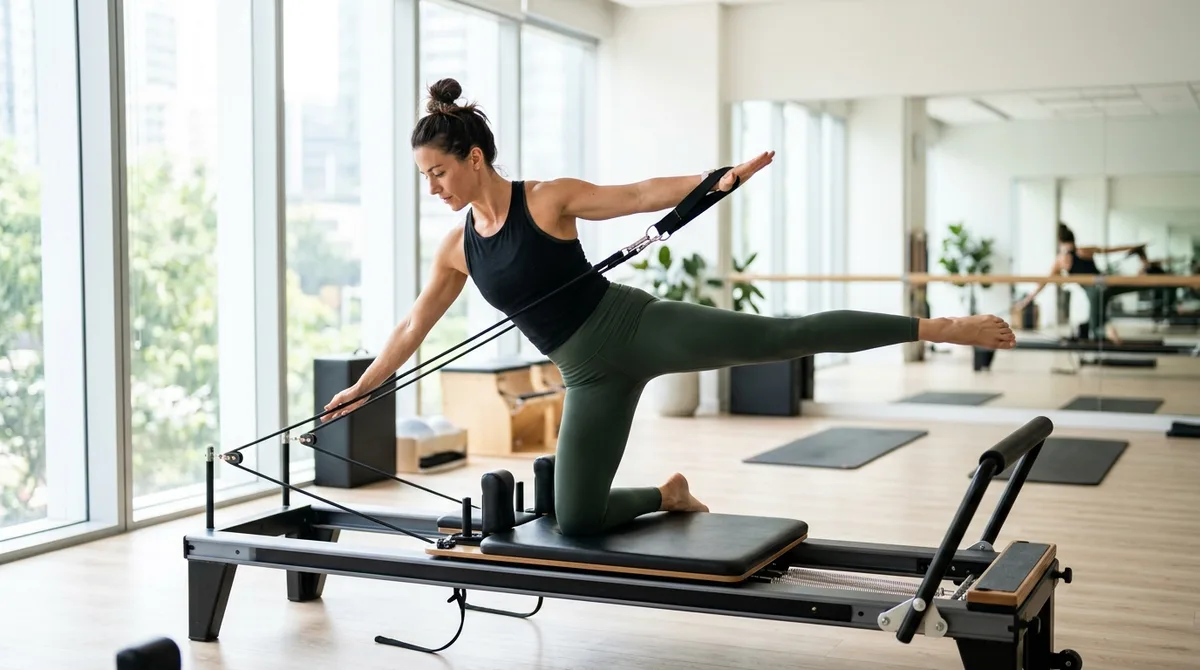
The error of muscle balance and static symmetry
In physics and biology, absolute static balance is associated with immobility and, ultimately, death. Living beings are complex systems in constant fluctuation. We are not marble statues.
The concept of “muscle balance” wrongly assumes that muscles on both sides of the body must have the exact same strength and length. However, human nature is intrinsically asymmetrical: we have a heart on one side, a liver on the other, and a dominant side we use more in daily life. Demanding perfect symmetry goes against our own evolutionary adaptability.
Demystifying “perfect posture”
One of the most harmful myths in the musculoskeletal field is the existence of a “perfect” static posture for sitting or standing. Rigorous scientific reviews consistently show that:
- There is no direct link between maintaining a rigid upright posture and preventing low back pain.
- People who constantly force their back to be “straight as a board” usually develop more muscle tension and fatigue, which increases pain sensitivity.
- The best posture is the next posture. The human body is built to vary, change position, and distribute loads. Postural variability is the true protector of your tissues.
Dynamic stability vs fragility
Instead of seeking motionless balance, we must seek dynamic stability: the body’s ability to react, adapt, and maintain control while moving through different positions and loads.
Your spine is not a stack of fragile blocks that easily slip out of alignment. It is a robust biological system, protected by strong ligaments and muscles capable of absorbing forces in multiple directions. Forcing the body to maintain a rigid pattern reduces its ability to react, making it more vulnerable to unexpected loads.
Conclusion: Embrace variability
To recover a resilient and pain-free body:
- Let go of the obsession with symmetry: Having asymmetries is normal and healthy.
- Move freely: Don’t be afraid to bend with a curved back or sit relaxed. Movement in multiple directions strengthens your tissues.
- Seek variability: Change positions frequently at work. Your back does not need symmetrical perfection; it needs freedom and adaptability.